
Dental Implants Louisville
Missing teeth don’t have to be a permanent problem – dental implants can help
William H. Smythe DMD on Dixie Highway in South End Louisville places custom dental implants to permanently replace missing or failing teeth — using titanium implant posts, digital imaging for precise planning, and shade-matched ceramic crowns for a natural result. Dr. William H. Smythe IV plans every case in-office before surgery, which keeps treatment under one roof and avoids outside referral in most cases. Patients from Shively, Pleasure Ridge Park, Valley Station, the South End, and across Jefferson County choose implants here because they stop bone loss in the jaw, restore full chewing strength, and look and feel like natural teeth — and our office has served the same Louisville neighborhood since 1973. Schedule your implant consultation or call (502) 448-2876.
How We Replace Missing Teeth at William H. Smythe DMD in Louisville
A dental implant is a small titanium post placed into the jawbone to act as an artificial tooth root, then restored with a custom crown, bridge, or denture on top. At our Dixie Highway office, Dr. William H. Smythe IV uses digital imaging to evaluate bone volume, nerve position, and sinus proximity before placing each implant — the kind of pre-surgical planning that has the largest impact on long-term implant success.
Missing teeth cause more than a cosmetic gap. They lead to difficulty chewing and speaking, bone loss in the alveolar ridge of the jaw, and shifting of the surrounding teeth as they drift into the empty space. While there are several tooth-replacement options, dental implants are widely considered the most effective long-term solution because they replace the tooth root itself.
Dental implants are artificial tooth roots that are placed directly into the jawbone, providing a stable foundation for a replacement tooth or teeth. This procedure involves minor surgery, during which a small titanium post is placed into the jawbone to replace the natural tooth root. Once the post is in place, a natural-looking dental crown is attached to the top, completing the restoration of the missing tooth.
One of the main benefits of dental implants is their durability and longevity. Unlike other tooth replacement options, such as bridges or dentures, dental implants are designed to last a lifetime with proper care and maintenance. They also offer superior comfort and stability, as they are anchored directly into the jawbone, allowing for a more natural look and feel. Additionally, dental implants can help to preserve the jawbone by stimulating bone growth, which can prevent further bone loss and maintain the structure of the face.
Dental implants offer a permanent solution to missing teeth that can improve both the function and appearance of your smile.
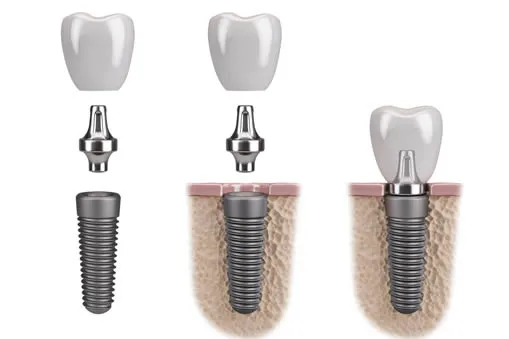
Dental Implant Options
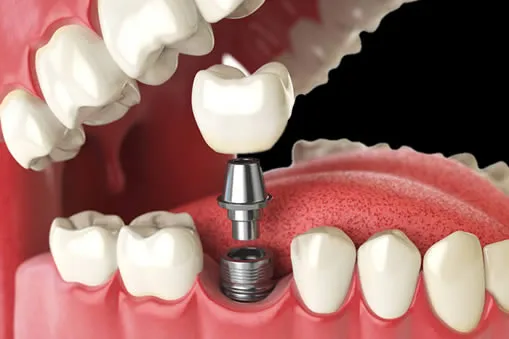
Single Dental Implants
Single dental implants are an effective solution for replacing a single missing tooth. After the implant has integrated with the jawbone, a custom-made crown is attached to the post, creating a natural-looking and functional replacement tooth. Single dental implants not only restore the aesthetics of a missing tooth, but also improve the functionality of the mouth and prevent surrounding teeth from shifting.
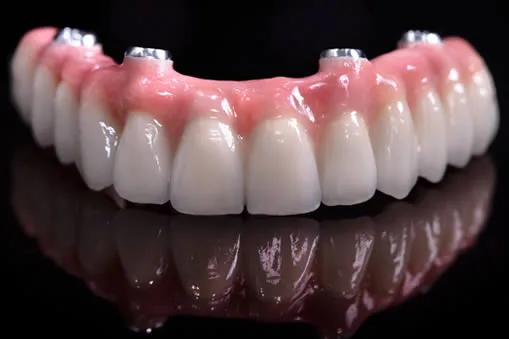
Implant Supported Dentures
Implant-supported dentures are a popular and effective solution for those who have lost most or all of their natural teeth. Unlike traditional dentures, which rely on suction or adhesives to stay in place, implant-supported dentures are anchored to dental implants, providing a stable and secure fit. This innovative dental treatment offers patients a range of benefits, including improved speech, enhanced comfort, and greater confidence when eating, smiling, and speaking.
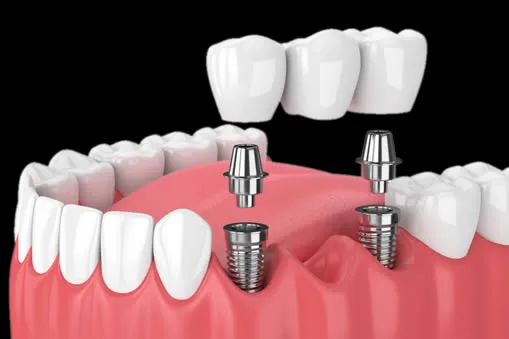
Implant Supported Bridge
Fixed dental bridges with dental implants offer an effective solution for replacing multiple missing teeth. This type of restoration uses dental implants as the foundation for a bridge of two or more artificial teeth, creating a stable and long-lasting solution for tooth loss.
Full Mouth Dental Implants
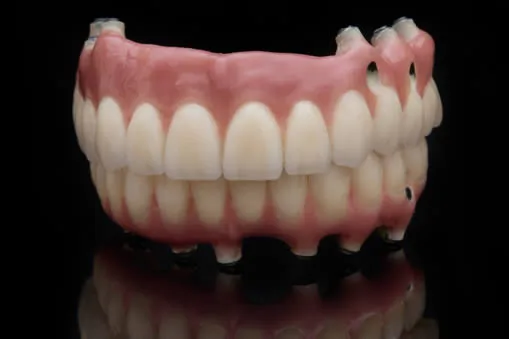
Also known as full arch dental implants offer a comprehensive solution for patients who have lost most or all of their teeth. The procedure involves the placement of multiple dental implants throughout the entire upper or lower jaw, providing a sturdy foundation for a customized set of replacement teeth. Full mouth dental implants can dramatically improve oral function, enhance your appearance, and restore your self-confidence.
What Are The Benefits Of Dental Implants?
Improve Oral Health
- Preservation of natural teeth
- Reduced risk of gum disease
Enhanced Appearance
- Natural-looking and permanent solution
- Improved speech and comfort
Improved Bone Health
- Stimulation of natural bone growth
- Prevention of bone loss and deterioration
Improved Function and Convenience
- Restored ability to eat properly
- Elimination the need for dentures
Improved Overall Health
- Improved nutrition and digestion
- Reduced risk of health issues associated with missing teeth
Improved Speech
- Allows clear and confident speech
- No slipping or moving unlike dentures
Am I a good candidate for Dental Implants?
Good overall health: To ensure the success of dental implant surgery, it’s crucial that you are in good overall health. This means that you should not have any underlying health conditions that could interfere with the healing process, such as diabetes or heart disease.
Healthy gums and jawbone: Dental implants rely on a certain amount of healthy gum tissue and jawbone for success. If you have advanced gum disease or significant bone loss in your jaw, it may not be possible to support an implant properly, making you an unsuitable candidate.
A commitment to oral hygiene: Like your natural teeth, dental implants require regular care and maintenance to ensure longevity. If you are committed to practicing good oral hygiene and taking care of your implants, you may be a suitable candidate for the procedure.
The most effective way to determine if dental implants are right for you is to schedule a consultation with our experienced implant dentist in Louisville. During your consultation, we will assess your individual needs and provide you with personalized recommendations to help you restore your smile.
If you have lost all or most of your teeth, you may be a candidate for All-on-4 dental implants.

The Advantages of Implants Over Traditional Dentures
Dental implants have several advantages over traditional dentures. First and foremost, dental implants provide a permanent solution for tooth loss. Unlike dentures that may slip or cause discomfort, implants are anchored into the jawbone, providing stability and a natural feel. This means that patients can speak, eat, and smile with confidence, without worrying about their dentures shifting or falling out.
Another advantage of dental implants is that they help to preserve the jawbone. When a tooth is lost, the bone in the jaw can begin to deteriorate over time. Dental implants mimic the natural tooth root and stimulate the bone, promoting growth and preventing further deterioration. This can help to maintain the shape and structure of the face, ensuring that patients look and feel their best.
Lastly, dental implants are more durable than traditional dentures. With proper care and maintenance, implants can last a lifetime, while dentures may need to be replaced every few years. This means that dental implants are a long-term investment in a patient’s oral health and overall wellbeing. Overall, dental implants offer a permanent, stable, and durable solution for tooth loss, with numerous advantages over traditional dentures.
What Dental Implants Cost in Louisville
Implant treatment cost depends on how many teeth are being replaced, whether bone grafting is needed, and the final restoration (single crown, implant-supported bridge, or full-arch denture). A single tooth implant — implant post, abutment, and crown together — typically falls in the low-to-mid four figures, while implant-supported full-arch options run higher. Schedule a consultation for a personalized treatment plan and exact estimate before any work begins.
Insurance reality: most dental insurance plans cover a portion of the crown or abutment but not the implant post itself. We accept most insurance plans and file claims on your behalf, so you do not have to chase reimbursement.
Payment options: Mastercard, Visa, American Express, Discover, cash, and CareCredit financing — which lets patients spread treatment cost across monthly payments.
If You Are Nervous About Implant Surgery
Most patients tell us the anticipation of implant surgery is harder than the procedure itself. Implant placement is performed under local anesthesia. You will feel a brief pinch from the numbing injection, then nothing more than light pressure as Dr. Smythe places the titanium post — no sharp pain at any point during the surgery itself.
Pre-surgical digital imaging shortens chair time and reduces the amount of cutting required, which means less swelling and a shorter recovery than older free-hand techniques. Most single-implant patients return to normal activity the next day with over-the-counter pain medication.
If dental anxiety is keeping you from treatment, talk with us at the consultation — we will pace the conversation, walk you through every step in advance, and discuss any sedation considerations specific to your medical history.
Is Dental Implants Right for You?
Dental Implants is a good fit if you are:
- Adults with one or more missing teeth
- Patients with healthy gums and adequate bone (or willing to graft)
- Non-smokers or patients willing to quit during healing
- Patients who want a permanent, non-removable solution
This may not be the right option if:
- Patients with severe uncontrolled diabetes or other conditions impairing healing
- Heavy smokers (significantly higher failure rates)
- Patients with severe bone loss unwilling to undergo grafting
- Children whose jaws are still growing
What to Expect During Your Dental Implants Visit
Here is exactly what happens at your appointment at William H. Smythe DMD. Knowing each step makes the experience far less intimidating — and lets you relax knowing what comes next.
- 1. CBCT planning. A 3D scan maps your bone volume and nerve position. Dr. William H. Smythe IV plans the exact implant location, angle, and depth digitally before ever touching the patient.
- 2. Implant placement. Under local anesthesia, Dr. William H. Smythe IV creates a small opening in the gum, drills a precise pilot hole, and places the titanium implant. You'll feel pressure but not pain. Takes 30–60 minutes per implant.
- 3. Healing phase. Over 3–4 months, the bone grows around the implant and locks it in place (osseointegration). A protective healing cap sits above the gumline during this period.
- 4. Abutment and crown. Once the implant is fully integrated, a small connector (abutment) is attached, then the final crown is placed. The result looks, feels, and functions like a natural tooth.
Single Implant vs Bridge vs Partial Denture
Here is how Dental Implants compares to the main alternatives. Dr. William H. Smythe IV reviews all options with every patient at William H. Smythe DMD so you make the best-informed decision for your situation.
| Feature | Single Implant | Dental Bridge | Partial Denture |
|---|---|---|---|
| Prevents bone loss | Yes | No | No |
| Affects neighbor teeth | No | Requires grinding | Hooks attach |
| Longevity (crown) | 10–15+ years | 7–12 years | 5–10 years |
| Implant itself | 20+ years / lifetime | — | — |
| Feels like a natural tooth | Yes | Close | No — removable |
| Cleaning | Normal floss | Special flossers | Remove and brush |
Common Concerns About Dental Implants
These are the questions patients at William H. Smythe DMD ask most often before committing to treatment. Dr. William H. Smythe IV addresses each one honestly at your consultation.
"Dental implants are too expensive"
Upfront cost is higher than a bridge or partial denture, but implants last decades and prevent bone loss — often costing less per year over a lifetime. Financing options make treatment accessible.
"I'm scared of the surgery"
Implant placement is performed under local anesthesia with optional sedation. Most patients report less discomfort than a tooth extraction. CBCT planning reduces surgical time and recovery.
"Will the implant really last a lifetime?"
With proper care (daily brushing, flossing, regular cleanings, no smoking), the titanium implant itself typically lasts decades. The crown may need replacement after 10–15 years, but the implant stays in place.
Risks and Considerations of Dental Implants
Every procedure has tradeoffs, and transparent conversation about them is part of informed consent. Dr. William H. Smythe IV reviews these at your consultation and answers every question before treatment begins.
- Post-surgical infection at the implant site
- Failure of osseointegration (implant does not fuse with bone)
- Nerve irritation or injury (minimized by CBCT planning)
- Sinus involvement for upper-jaw implants
- Peri-implantitis (bone loss around the implant) if hygiene is neglected
- Crown or abutment may need replacement over time
How We Approach Dental Implants at William H. Smythe DMD
Dental implants are the closest replacement to a natural tooth available in modern dentistry. They fuse with the jawbone through a process called osseointegration, and unlike a bridge, they do not rely on neighboring teeth for support — which preserves more of the natural structure intact.
The single biggest factor in long-term implant success is planning. Digital 3D imaging is used to map bone volume, mandibular nerve position, and maxillary sinus proximity before surgery — guessing is not an option when planning a 20-year restoration. Where bone volume is insufficient, we discuss bone grafting or, for upper-jaw cases, sinus lift augmentation as part of the consultation.
The restorative side matters just as much as the surgical side. The abutment connection, occlusal loading, shade matching, and emergence profile of the final crown all determine whether the finished implant looks and functions like the natural tooth it is replacing. Long-term maintenance — daily hygiene around the implant, routine cleanings, and watching for any sign of peri-implantitis — is what keeps implants stable for decades.
Medically reviewed by Dr. William H. Smythe IV, DMD · University of Louisville School of Dentistry, 1996 · Kentucky dental license #7195 · William H. Smythe DMD, 5141 Dixie Highway, Louisville, KY 40216 · same location since 1973.
Frequently Asked Questions About Dental Implants Louisville
Are dental implants painful? Most patients report experiencing little to no pain during the dental implant procedure.
Not everyone is a suitable candidate for dental implants. Patients need to have healthy gums and adequate bone density to support the implant.
Dental implants are designed to be a long-term solution for tooth loss. With proper care and maintenance, they can last a lifetime.
Dental implants can be removed, but it is not recommended unless absolutely necessary. This process can be complicated and may require additional surgery.
Most dental insurance plans do not cover the cost of dental implants. However, some plans may cover a portion of the cost, depending on the plan and the individual’s circumstances.
Smoking can have a negative impact on dental implants’ success rate. Smoking can increase the risk of infection and hinder the healing process.
In some cases, dental implants can be completed in a single day. However, this is not always possible, and it depends on the individual’s needs and circumstances.
There are several alternatives to dental implants, including dentures and dental bridges. However, these options may not be as long-lasting or effective as dental implants.
The success rate of dental implants is very high, with a success rate of over 95%. Factors that can affect the success rate include a patient’s overall health, the location of the implant, and the skill of the dental professional.
There is no age limit for dental implants. As long as a patient has healthy gums and sufficient bone density, they may be a suitable candidate for dental implants.
Yes. At our Louisville dental office we offer dental implants to patients living in Louisville and the surrounding area. Contact our office today to schedule an appointment.
With proper care, dental implants are designed to last 20+ years and often a lifetime. The crown attached to the implant may need replacement after 10–15 years, but the titanium implant itself typically remains stable for decades.
Coverage varies widely. Some insurance plans cover a portion of the crown or abutment but not the implant post itself. We verify benefits and provide a personalized estimate at your consultation, and we offer financing options to make treatment manageable.
Implant placement carries risks including infection, implant failure (failure of osseointegration), nerve irritation, sinus involvement, and peri-implantitis (bone loss around the implant). Dr. William H. Smythe IV uses CBCT imaging and careful medical history review to minimize these risks.
Dental Implants for Louisville, KY and the Surrounding Neighborhoods
William H. Smythe DMD has cared for Louisville families from the same Dixie Highway location since 1973. The office is on Dixie Highway in South End Louisville, with easy access from the Watterson Expressway (I-264) and I-64 — making the drive in from Shively, Pleasure Ridge Park, Valley Station, Iroquois, Auburndale, Fairdale, the South End, and across Jefferson County straightforward whether you are coming for a single-tooth implant or a longer full-arch case.
Our practice is family-friendly and accessible — free on-site parking, a wheelchair ramp, and an elevator to our second-floor office at Suite 202. Office hours are Monday through Wednesday 9 AM to 4 PM, Thursday 9 AM to 2 PM, and Friday 8:30 AM to 12:30 PM. To schedule a dental implant consultation, request an appointment online or call (502) 448-2876.
Medical Disclaimer
This content is for informational purposes only and does not constitute dental or medical advice, diagnosis, or treatment. Dental implant placement is a surgical procedure with risks including infection, nerve injury, implant failure, sinus complications, and bone loss. Candidacy depends on bone volume and overall health. Consult Dr. William H. Smythe IV or a qualified dental professional regarding any questions about your oral health. Individual results may vary.
Learn More About Dental Implants Louisville
Contact our office to discuss how this treatment can help you achieve your dental health goals.